
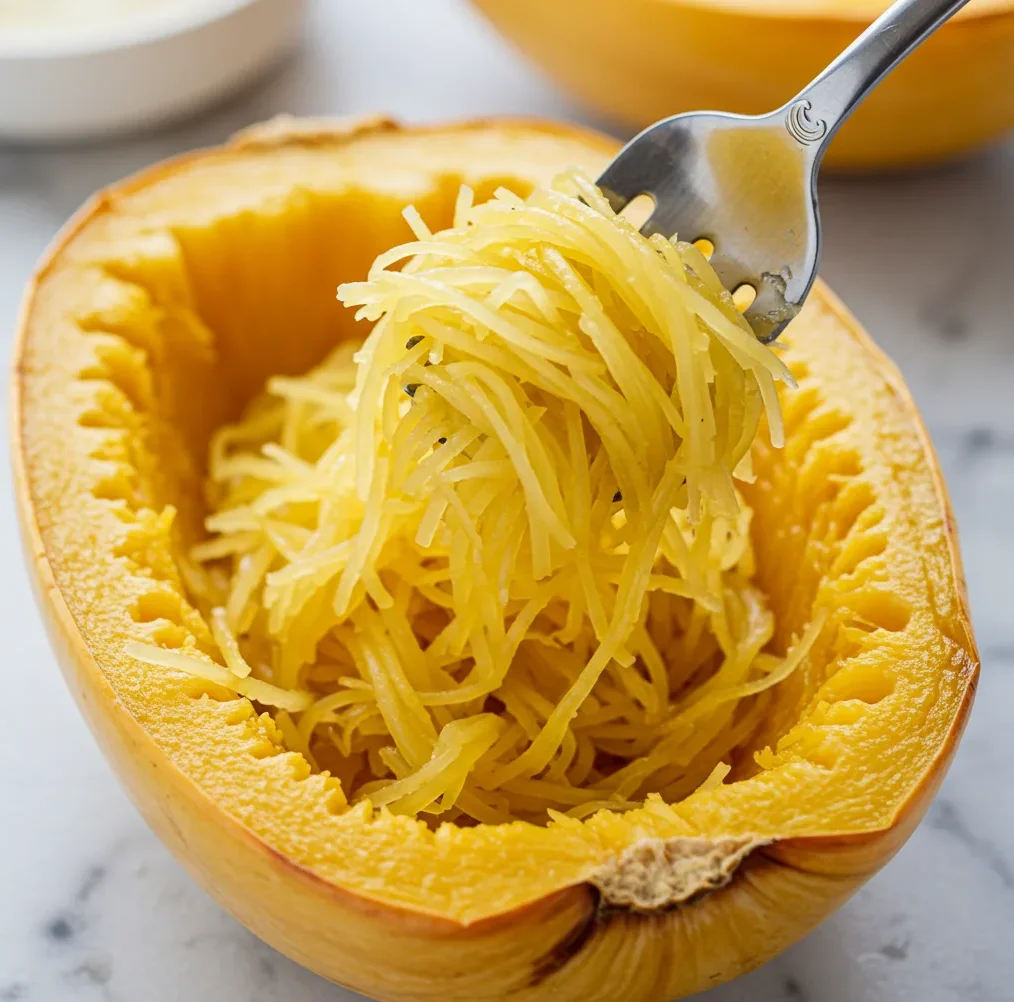
Spaghetti squash is the unsung hero of healthy, hearty meals. This golden-yellow vegetable might look humble on the outside, but once roasted, its flesh transforms into naturally noodle-like strands that are slightly sweet, delightfully tender, and shockingly satisfying. Whether you’re low-carb, gluten-free, paleo, or just trying to eat more veggies, spaghetti squash is about to become your new best friend.
Why You’ll Love This Recipe
You’ll fall in love with spaghetti squash because it gives you all the satisfaction of pasta, without the heavy carbs or post-meal sluggishness. Its mild flavor makes it the perfect blank canvas for your favorite sauces—from creamy Alfredo and zesty marinara to Asian-inspired stir-frys and cheesy casseroles. And here’s the best part: it’s super easy to cook, and you don’t need any fancy tools or complicated prep. Just slice it, season it, roast it, and fork out the strands—voilà, instant vegetable noodles. It’s affordable, versatile, family-friendly, and can be dressed up or down depending on your cravings. Plus, you get to feel like a bit of a wizard the first time you pull apart the roasted squash and watch it turn into spaghetti. Seriously—vegetable magic.
Ingredients
(For a basic roasted spaghetti squash. Feel free to dress it up after roasting!)
1 medium spaghetti squash
1–2 tablespoons olive oil
Salt (to taste)
Black pepper (to taste)
Optional: garlic powder, Italian seasoning, chili flakes, or grated Parmesan
Instructions
Step 1: Preheat your oven
Set your oven to 400°F (200°C). This is the ideal temperature to get a squash that’s perfectly tender but not mushy. While the oven heats, line a baking sheet with parchment paper or foil for easier cleanup later.
Step 2: Slice the squash carefully
Place your spaghetti squash on a sturdy cutting board. Using a sharp chef’s knife, slice it in half lengthwise. This part can be a bit tough—the squash is dense, and the skin is thick. If it feels too hard to cut, you can microwave the whole squash for 2–3 minutes to soften it slightly before slicing. Once halved, use a spoon to scrape out all the seeds and the slimy, stringy bits surrounding them. (You can save the seeds to roast later—just like pumpkin seeds.)
Step 3: Season the squash
Drizzle the inside of each half with olive oil and rub it in evenly. Then sprinkle a good pinch of salt and black pepper over the surface. If you want to add more flavor at this stage, now’s the time! Garlic powder, Italian herbs, or chili flakes all work beautifully. If you’re planning to eat the squash as-is, seasoning is key to enhancing its natural flavor.
Step 4: Roast it to perfection
Place both squash halves cut-side down on your baking sheet. Roasting it this way allows the moisture to steam out while the flesh caramelizes slightly, giving you richer flavor and firmer “spaghetti” strands. Roast for 35 to 45 minutes, depending on the size of your squash. You’ll know it’s ready when the skin feels tender when pressed, and a fork can easily pull strands away from the flesh.
Step 5: Let it cool, then shred into strands
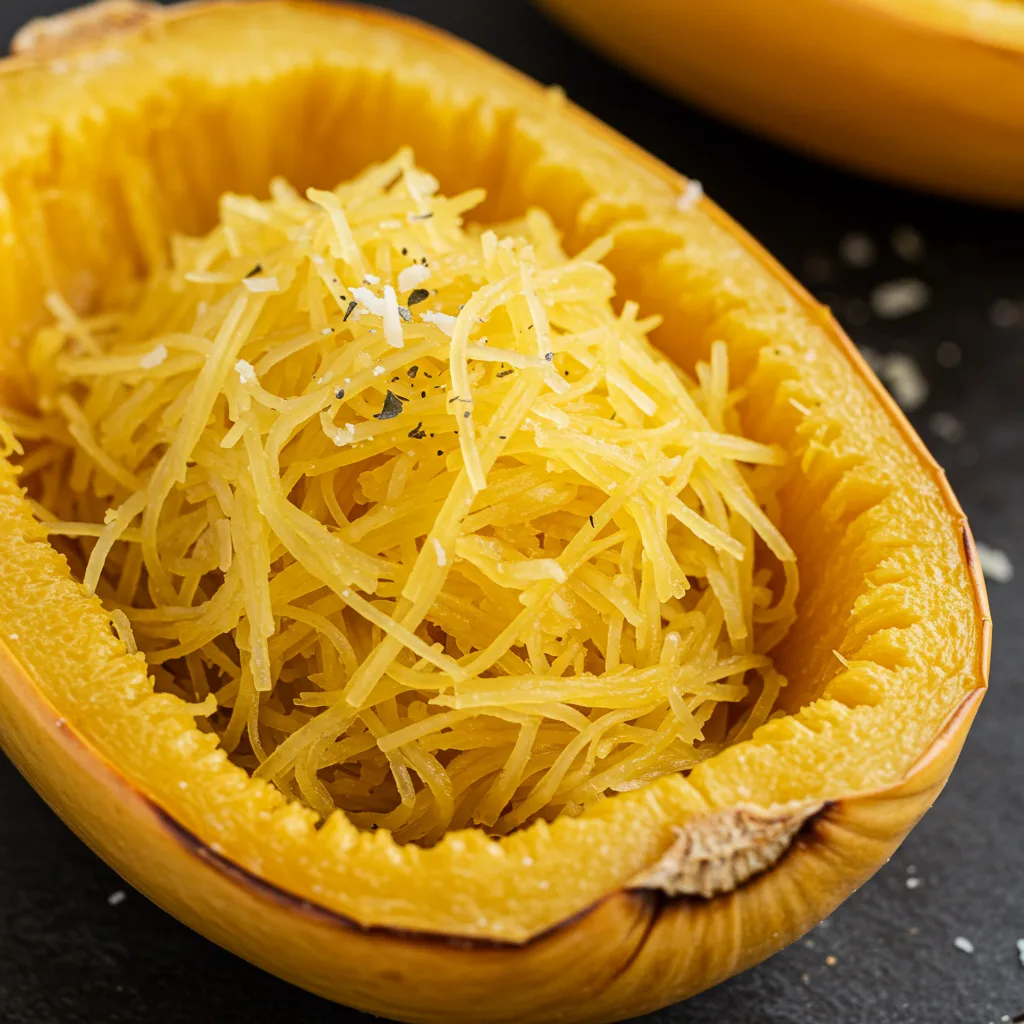
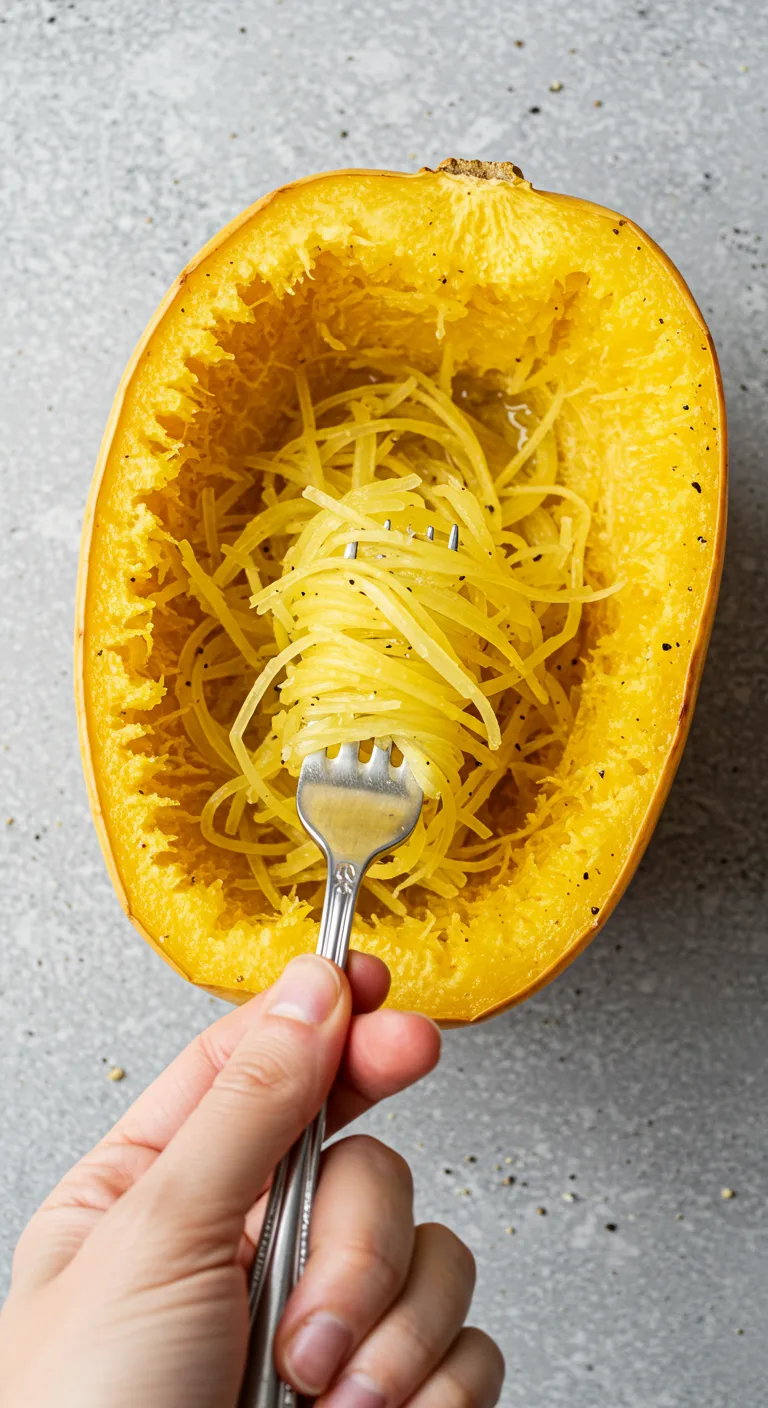
Once your squash is done roasting, remove it from the oven and flip the halves over so the steam can escape. Let it cool for about 5 to 10 minutes. Then, grab a fork and start scraping lengthwise across the flesh. You’ll be amazed to see it naturally separate into beautiful, golden spaghetti-like strands. Keep going until you’ve fluffed out all the insides.
Step 6: Serve and enjoy
Now comes the fun part—serving it up! You can pile the squash onto a plate and top it with marinara and Parmesan for a healthy spaghetti night, mix it with pesto and cherry tomatoes, or stir in sautéed veggies and chicken for a one-bowl wonder. You can even stuff the squash halves with fillings and pop them back in the oven for a few more minutes to melt cheese on top. The options are endless.
Servings and Timing
Serves: 2–4 people (depending on size and how it’s served)
Prep Time: 10 minutes
Cook Time: 40 minutes
Total Time: 50 minutes
Variations
Spaghetti squash is one of the most versatile veggies around. Here are some tasty ways to mix it up:
Cheesy Garlic Bake: Mix the strands with garlic butter, mozzarella, and Parmesan. Bake in the squash shell until bubbly.
Pesto Bowl: Toss roasted squash with basil pesto, cherry tomatoes, and pine nuts.
Taco-Style: Fill the halves with seasoned ground beef, black beans, salsa, and cheese. Bake for a few minutes until melty.
Asian-Inspired Stir Fry: Sauté the strands with soy sauce, sesame oil, garlic, and veggies. Add tofu or chicken.
Carbonara-Style: Stir in cooked bacon, a bit of cream or egg yolk, and grated pecorino.
Storage and Reheating
Refrigerator:
Transfer cooked squash to an airtight container and store in the fridge for up to 5 days.
Freezer:
Yes, you can freeze it! Let it cool completely first. Store strands in a freezer-safe bag and freeze for up to 2 months.
To reheat:
Warm in a skillet over medium heat with a little olive oil, or microwave in 30-second bursts until heated through. Avoid overcooking—it can become mushy.
FAQs
Does spaghetti squash really taste like spaghetti?
Not exactly. It’s not as chewy or starchy, but it’s tender and slightly sweet, with a neutral flavor that absorbs sauces beautifully.
Can I microwave spaghetti squash instead of roasting?
Yes! Cut it in half, scoop out the seeds, place in a dish with a bit of water, cover, and microwave for 10–12 minutes until tender.
How do I keep it from getting watery?
After roasting, let the strands sit in a colander for 5–10 minutes to drain any excess moisture before serving.
Is spaghetti squash healthy?
Absolutely. It’s low in calories and carbs but high in fiber, vitamin C, manganese, and antioxidants.
Can I eat the skin?
No—the skin is tough and not meant to be eaten. Stick to the tender strands inside.
How do I choose a ripe spaghetti squash?
Look for one that’s firm, heavy for its size, and has a dry, brown stem. Avoid any with soft spots or green patches.
Can I spiralize it raw?
Nope. Unlike zucchini, spaghetti squash only forms noodle-like strands after it’s cooked.
Conclusion
Spaghetti squash isn’t just a healthy alternative to pasta—it’s a total game-changer in the kitchen. With its naturally noodle-like texture, subtle sweetness, and endless ways to dress it up, it’s a vegetable that finally lives up to the hype. Whether you’re cutting carbs, eating clean, or just want something new and exciting for dinner, spaghetti squash brings flavor, flexibility, and fun to the table. Roast it once, and you’ll be hooked.
Print
Spaghetti Squash
- Total Time: 50 minutes
- Yield: 4 servings
- Diet: Gluten Free
Description
Spaghetti squash is a low-carb, gluten-free pasta alternative with a tender, noodle-like texture—perfect for healthy dinners, meal prep, and endless variations.
Ingredients
- 1 medium spaghetti squash
- 1–2 tbsp olive oil
- Salt, to taste
- Black pepper, to taste
- Optional: garlic powder, Italian herbs, chili flakes, Parmesan cheese
Instructions
- Preheat the oven to 400°F (200°C). Line a baking sheet with parchment or foil.
- Cut the squash in half lengthwise. Use a sharp knife—it’s tough, so go slow. Scoop out the seeds and stringy pulp with a spoon.
- Season the inside of each half with olive oil, salt, pepper, and any optional herbs or spices you like.
- Place squash halves cut-side down on the baking sheet. Roast for 35–45 minutes until the skin is soft and a fork easily pulls strands away.
- Remove from the oven and let cool slightly. Flip the halves over to release steam.
- Scrape the flesh with a fork to create long spaghetti-like strands. Use in any dish you’d normally use noodles or pasta.
Notes
- Microwave the whole squash for 2–3 minutes before cutting to soften the skin.
- Add garlic powder or chili flakes before roasting for flavor-packed strands.
- Use the empty squash shells as bowls—perfect for stuffed squash recipes!
- After roasting, let strands rest in a colander to release excess moisture.
- Great for meal prep: refrigerate for up to 5 days or freeze for up to 2 months.
- Prep Time: 10 minutes
- Cook Time: 40 minutes